
What Ice Baths Really Teach Us About the Nervous System and Resilience
Ice baths don’t build resilience.
The way you approach them does.
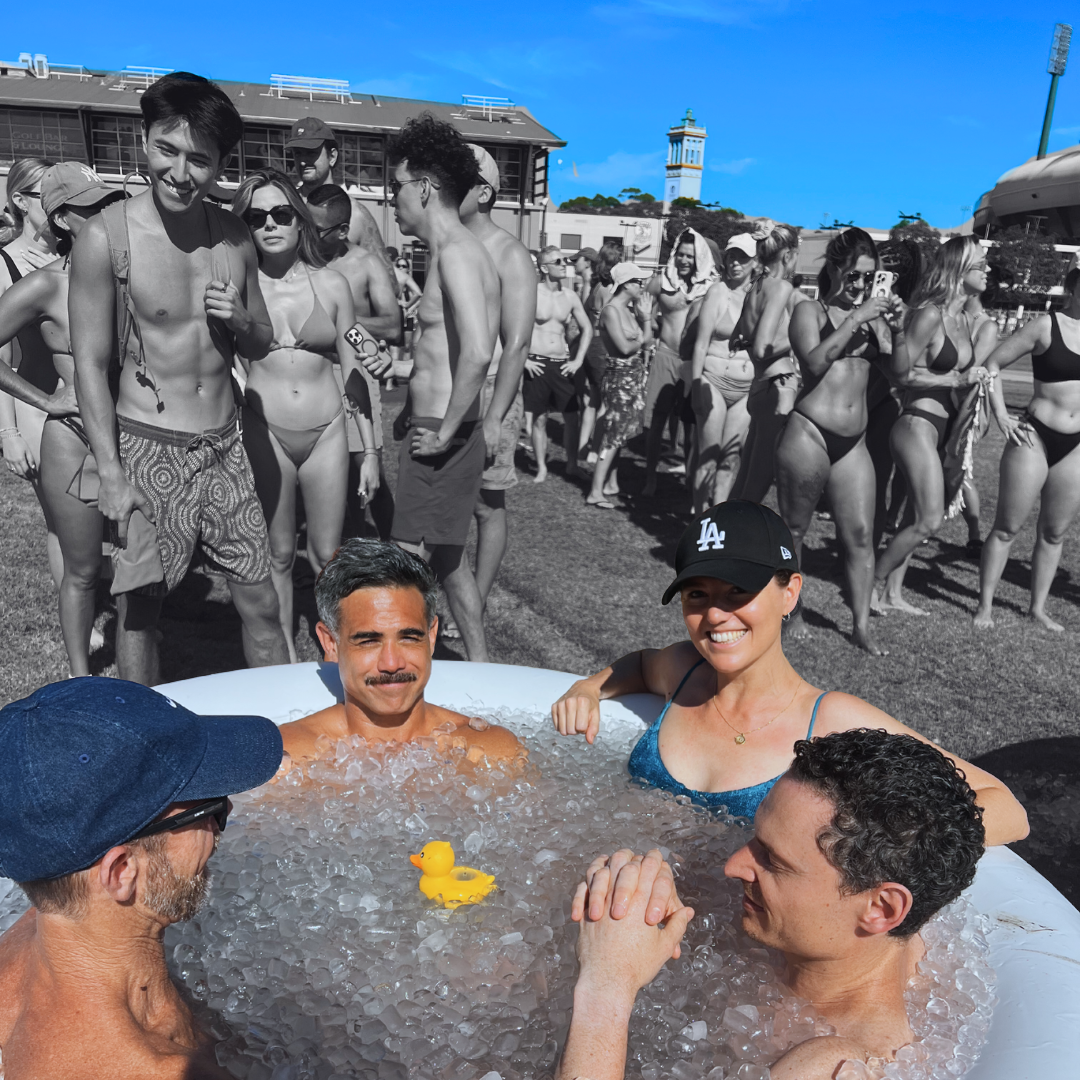
Was I crazy? It was 8 a.m on a sunny Saturday morning, and I was lining up to voluntarily submerge my body in an ice bath hovering close to zero degrees. But I wasn’t alone. I was joined by a couple of hundred others at a Cool 2 Be Conscious event in Sydney last week.
By now, you’ve probably come across the ice bath trend. It’s not new. Cold exposure is everywhere. For a while, social media was saturated with reels of athletes and cold-water enthusiasts preaching the physiological benefits, claiming they improve muscle recovery, reduce inflammation, boot immune function and mood. However, the research evidence is still out on this.
As a health and mindset coach, I want to be clear: I’m not prescribing ice baths as a healing solution for chronic illness. There’s a far smarter and more compassionate process for that.
What fascinates me about ice baths isn’t what happens in the cold water—it’s what happens in your brain before you even get in.
Ice Baths Are the Trend. But They’re Not the Point.
Unsurprisingly, people have mixed reactions to the idea of plunging into ice-cold water.
“Absolutely not.”
“Why would anyone willingly do that?”
“That sounds intense… but kind of intriguing.”
The ice bath is the hook. The spectacle. The thing that looks impressive and uncomfortable enough to spark curiosity.
But the real benefits—and the deeper transformation—don’t come from the cold.
It comes from how the brain perceives threat, and how we choose to approach challenge.
When you step toward something hard—whether that’s an ice bath, a difficult conversation, or returning to movement after pain or fatigue—your brain and nervous system are constantly asking one fundamental question:
Am I safe, or am I under threat?
Your answer determines everything.
If your brain labels something as dangerous, your body mobilises accordingly: stress hormones rise, muscles brace, breathing shifts.
If your brain interprets the experience as a safe challenge, your physiology responds in a completely different way.
Research on stress mindset even shows that believing stress is enhancing rather than harmful can positively influence resilience, performance, and hormonal responses (Crum et al., 2013).
What People Were Really There For
In his welcoming address, Ryan Hubbard—the leader of the event—acknowledged something powerful: people weren’t showing up primarily for the physiological benefits of breath work and cold exposure.
They were coming back for the community.
Hundreds of people. Breathing together. Encouraging one another. Doing something hard—together.
That matters more than we realise.
When you’re surrounded by others who are calm, supportive, and uplifting, your brain receives a very different message:
This is uncomfortable, but I am safe. I can do this.
And that single reframe can completely change your physiological response.
Finding Comfort in Discomfort Builds Resilience
Resilience isn’t built by forcing yourself through fear.
It’s built by first becoming aware of your response.
If you approach discomfort from a place of fear—bracing, tensing, catastrophising—your body responds accordingly: elevated stress hormones, protective shutdown, and exhaustion afterward.
But when you lean into challenge with curiosity, intention, positive perception, and support, your nervous system can respond appropriately—even while doing hard things.
That’s where growth happens.
That’s how resilience is built.
Why This Matters for Chronic Fatigue, Pain, and Anxiety
I see this pattern constantly in my work with clients.
For people living with chronic fatigue and pain, they may experience post-exertional malaise (PEM)—the dreaded “crash” after activity—the brain can begin to associate movement itself with danger.
Based on past experiences, the nervous system learns:
Activity = Threat.
As a result, even gentle exertion can unconsciously and automatically trigger a stress response and generate symptoms—before the body has actually done anything.
Pain neuroscience research shows that when the brain perceives threat, it can amplify pain signals even in the absence of tissue damage (Moseley & Butler, 2015).
This is where healing truly happens—not by pushing through, but by retraining the brain’s threat perception.
Learning to approach activity differently.
Teaching the nervous system that challenge does not automatically equal danger.
Signalling safety and rebuilding trust between the brain and the body.
This process is essential for recovery—not only from fatigue, but from pain and anxiety as well.
The Takeaway
Ice baths may be trending. But in my opinion the deeper lesson has nothing to do with cold water.
It’s about understanding how your brain perceives threat, how it interprets challenge, and how those perceptions directly shape your body’s stress response and physiology.
The cold water fades.
What stays is the reminder that healing, growth, and resilience aren’t built through pushing, punishment, or avoidance—but through connection, safety, and a willingness to meet discomfort with compassionate awareness rather than fear.
And that lesson goes far beyond the ice.
References
Crum, A. J., Salovey, P., & Achor, S. (2013). Rethinking stress: The role of mindsets in determining the stress response. Health Psychology.
Moseley, G. L., & Butler, D. S. (2015). Explain Pain.
Hi I’m Liz.
Health & Mindset Coach and Advanced Lightning Process® Practitioner.
I specialise in empowering people stuck with chronic symptoms with the knowledge, skills and support to reclaim their health and transform their life.
If you are ready to learn how to influence your mind-body connection, join me on my next Lightning Process® seminar, either online or in Sydney. Check out the next training dates here.
Want to know more about how we can work together, contact me for a free 20 minute discovery call.
